Buy logisch.be ?
We are moving the project
logisch.be .
Are you interested in purchasing the domain
logisch.be ?
domain@kv-gmbh.de · 0541-91531010
Buy logisch.be ?
Is scalp pigmentation reversible?
Scalp pigmentation, also known as scalp micropigmentation, is a semi-permanent cosmetic tattoo that creates the appearance of hair follicles on the scalp. While it is possible to remove or lighten scalp pigmentation through laser treatments or other removal methods, the process can be challenging and may not always be completely reversible. It is important to carefully consider the decision to undergo scalp pigmentation, as it is a long-lasting procedure that may require significant effort to reverse. **
Is hair pigmentation reversible?
Hair pigmentation is not reversible in the sense that once hair turns gray or white due to a lack of melanin production, it cannot naturally revert back to its original color. However, there are temporary solutions such as hair dyes or color treatments that can restore hair pigmentation. Additionally, certain lifestyle changes or treatments may help slow down the graying process, but they cannot fully reverse it. **
Similar search terms for Pigmentation
Top-Angebote
Products related to Pigmentation:
-
What do pigmentation spots look like?
Pigmentation spots, also known as age spots or sun spots, appear as small, flat, and darkened areas on the skin. They are typically brown, black, or gray in color and can vary in size. These spots are often found on areas of the skin that are frequently exposed to the sun, such as the face, hands, shoulders, and arms. Pigmentation spots are caused by an overproduction of melanin, the pigment that gives skin its color, and can become more noticeable with age or sun exposure. **
-
How can you lighten pigmentation spots?
You can lighten pigmentation spots by using topical treatments such as hydroquinone, retinoids, and vitamin C serums. These ingredients can help to reduce the appearance of pigmentation by inhibiting melanin production and promoting skin cell turnover. Additionally, using sunscreen daily can prevent further darkening of pigmentation spots and protect the skin from UV damage. In-office treatments such as chemical peels, microdermabrasion, and laser therapy can also be effective in lightening pigmentation spots. **
-
What causes pigmentation spots in the solarium?
Pigmentation spots in the solarium are caused by overexposure to ultraviolet (UV) radiation. When the skin is exposed to UV rays for extended periods, it can lead to an overproduction of melanin, resulting in dark spots or patches on the skin. This can happen when individuals spend too much time in a solarium without proper protection, such as sunscreen or protective clothing. It is important to limit exposure to UV radiation to prevent pigmentation spots and other skin damage. **
-
How do pimples and pigmentation spots develop?
Pimples develop when the hair follicles on the skin become clogged with oil and dead skin cells, leading to the growth of bacteria and inflammation. This can be caused by hormonal changes, genetics, and certain medications. Pigmentation spots, on the other hand, develop when there is an overproduction of melanin in the skin, leading to areas of darker pigmentation. This can be triggered by sun exposure, hormonal changes, and skin injuries. Both pimples and pigmentation spots can be influenced by genetics, lifestyle factors, and skincare habits. **
How do you find such pigmentation spots?
Pigmentation spots can be found by visually inspecting the skin for areas of discoloration or darkening. They often appear as flat, brown, or black spots on the skin and can vary in size and shape. It is important to regularly check the skin for any changes in pigmentation spots, as they can be a sign of sun damage, aging, or other skin conditions. If you notice any new or changing pigmentation spots, it is recommended to consult a dermatologist for further evaluation and potential treatment. **
Is black pigmentation on the skin normal?
Yes, black pigmentation on the skin is normal and is a result of the production of melanin, a natural pigment that gives skin its color. Melanin helps protect the skin from the sun's harmful UV rays and is produced in response to sun exposure. However, changes in pigmentation or the appearance of new or irregularly shaped moles should be monitored and evaluated by a healthcare professional, as they could be a sign of skin conditions or diseases. **
Top-Angebote
Products related to Pigmentation:
-
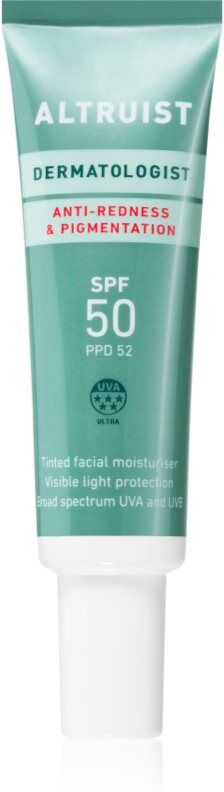
Altruist Anti-Redness & Pigmentation crème de jour hydratante SPF 50 30 mlAltruist Anti-Redness & Pigmentation, 30 ml, Protection contre le rayonnement solaire pour femme, Vous ne voulez pas sous-estimer les soins du visage ? Utilisez une crème pour le visage tous les jours. Elle constitue la base de tout soin de la peau, sans laquelle une routine régulière ne pourrait se passer, quel que soit le type de peaux et ses besoins. La crème pour le visage Altruist Anti-Redness & Pigmentation favorise les fonctions naturelles de la peau, préserve son équilibre, lui procure toute l’hydratation dont elle a besoin et lui procure une mine globalement plus saine. Le produit : unifie le teint de la peau agit contre les imperfections empêche la brillance indésirable apaise la peau irritée et rougie anti-rougeurs Composition du produit : produit végétalien Mode d’emploi : Appliquez sur la peau préalablement nettoyée et massez en faisant des mouvements circulaires. Appliquez sur le visage, le cou et le décolleté.16,50 €*Shipping: 3,45 €Secure redirect to the provider
-
Is scalp pigmentation reversible?
Scalp pigmentation, also known as scalp micropigmentation, is a semi-permanent cosmetic tattoo that creates the appearance of hair follicles on the scalp. While it is possible to remove or lighten scalp pigmentation through laser treatments or other removal methods, the process can be challenging and may not always be completely reversible. It is important to carefully consider the decision to undergo scalp pigmentation, as it is a long-lasting procedure that may require significant effort to reverse. **
-
Is hair pigmentation reversible?
Hair pigmentation is not reversible in the sense that once hair turns gray or white due to a lack of melanin production, it cannot naturally revert back to its original color. However, there are temporary solutions such as hair dyes or color treatments that can restore hair pigmentation. Additionally, certain lifestyle changes or treatments may help slow down the graying process, but they cannot fully reverse it. **
-
What do pigmentation spots look like?
Pigmentation spots, also known as age spots or sun spots, appear as small, flat, and darkened areas on the skin. They are typically brown, black, or gray in color and can vary in size. These spots are often found on areas of the skin that are frequently exposed to the sun, such as the face, hands, shoulders, and arms. Pigmentation spots are caused by an overproduction of melanin, the pigment that gives skin its color, and can become more noticeable with age or sun exposure. **
-
How can you lighten pigmentation spots?
You can lighten pigmentation spots by using topical treatments such as hydroquinone, retinoids, and vitamin C serums. These ingredients can help to reduce the appearance of pigmentation by inhibiting melanin production and promoting skin cell turnover. Additionally, using sunscreen daily can prevent further darkening of pigmentation spots and protect the skin from UV damage. In-office treatments such as chemical peels, microdermabrasion, and laser therapy can also be effective in lightening pigmentation spots. **
Similar search terms for Pigmentation
-
What causes pigmentation spots in the solarium?
Pigmentation spots in the solarium are caused by overexposure to ultraviolet (UV) radiation. When the skin is exposed to UV rays for extended periods, it can lead to an overproduction of melanin, resulting in dark spots or patches on the skin. This can happen when individuals spend too much time in a solarium without proper protection, such as sunscreen or protective clothing. It is important to limit exposure to UV radiation to prevent pigmentation spots and other skin damage. **
-
How do pimples and pigmentation spots develop?
Pimples develop when the hair follicles on the skin become clogged with oil and dead skin cells, leading to the growth of bacteria and inflammation. This can be caused by hormonal changes, genetics, and certain medications. Pigmentation spots, on the other hand, develop when there is an overproduction of melanin in the skin, leading to areas of darker pigmentation. This can be triggered by sun exposure, hormonal changes, and skin injuries. Both pimples and pigmentation spots can be influenced by genetics, lifestyle factors, and skincare habits. **
-
How do you find such pigmentation spots?
Pigmentation spots can be found by visually inspecting the skin for areas of discoloration or darkening. They often appear as flat, brown, or black spots on the skin and can vary in size and shape. It is important to regularly check the skin for any changes in pigmentation spots, as they can be a sign of sun damage, aging, or other skin conditions. If you notice any new or changing pigmentation spots, it is recommended to consult a dermatologist for further evaluation and potential treatment. **
-
Is black pigmentation on the skin normal?
Yes, black pigmentation on the skin is normal and is a result of the production of melanin, a natural pigment that gives skin its color. Melanin helps protect the skin from the sun's harmful UV rays and is produced in response to sun exposure. However, changes in pigmentation or the appearance of new or irregularly shaped moles should be monitored and evaluated by a healthcare professional, as they could be a sign of skin conditions or diseases. **
* All prices are inclusive of VAT and, if applicable, plus shipping costs. The offer information is based on the details provided by the respective shop and is updated through automated processes. Real-time updates do not occur, so deviations can occur in individual cases. ** Note: Parts of this content were created by AI.